STORIES OF AVANA NUI
Passage of the People
Long before compasses and maps, there were the stars, the tides, and the chants of master navigators. In this sacred world of voyaging, Avana stood as a gateway, a harbour of courage, preparation, and trust. Navigators read the night sky, the ocean swells, birds in flight, and clouds on the horizon as they prepared vaka moana (double-hulled canoes) for journeys across the vast Pacific.
The legacy of Avana begins with Tongaiti, whose arrival gave this place its ancient name: Te Avarau o Tongaiti — the Two Hundred Harbours of Tongaiti. His marae on Motu Tapu, the Sacred Islet, and across the passage at Vaerota, laid the foundation for Ngatangiia as a place of chiefly authority and spiritual leadership. Later, Tangiia Nui strengthened this legacy, establishing marae and chiefly courts that continue to shape the Cook Islands today.
But Avana’s most enduring story lies in the gathering of the seven vaka.
Over generations, many vaka passed through these waters, but seven would become especially remembered in the traditions of Aotearoa. Takitumu, Tainui, Te Arawa, Aotea, Mataatua, Tokomaru, and Kurahaupo are remembered today as the voyaging canoes that form the ancestral foundation for many iwi Maori (Maori tribes) in Aotearoa. These were not accidental voyages, but deliberate expeditions. Each vaka carried navigators, priests, chiefs, warriors, and families who trusted the sea and the knowledge of their ancestors.
Avana was not where every journey began, but it was where journeys came together.
On the shore, families gathered to farewell their loved ones. Supplies were loaded, blessings spoken, and vaka launched one by one. The passage moved with the rhythm of tides and the weight of generations. These vaka carried more than people; they carried genealogy, knowledge, and the spirit of exploration that still connects the Cook Islands and Aotearoa today.
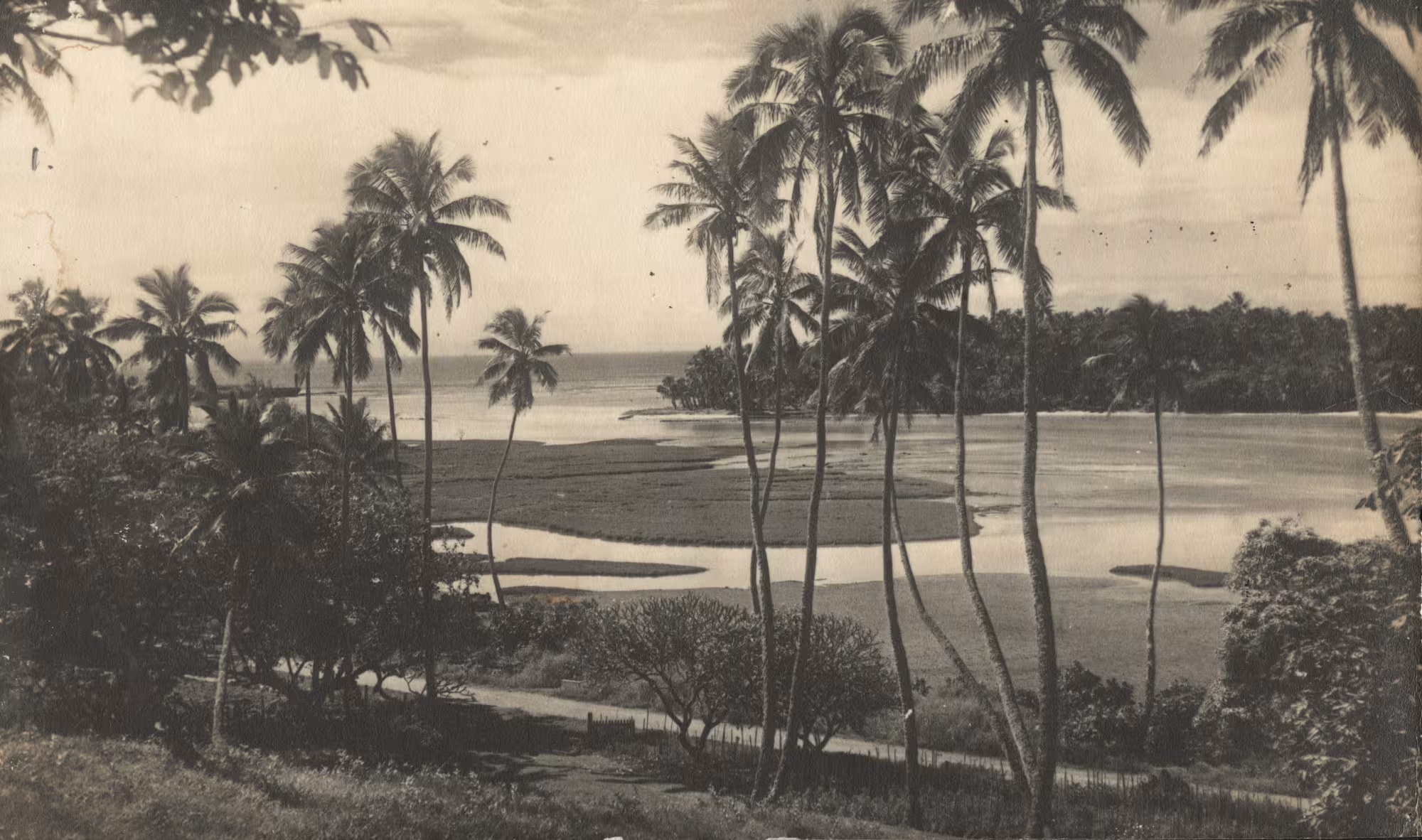
Avana is also a place of community and resilience. It is where people still gather for ature (mackerel) fishing, working together and sharing the catch. Nearby, the stone fish traps at Aroko speak to the ingenuity of ancestors who lived in harmony with the tides. The Avana seawall, built by local men with bare hands and determination, continues to protect homes and stories from the ocean.
In the shape of the landscape, the legacy lives on. Seven coconut palms and seven toa (ironwood) trees grow in formation as living monuments to the vaka. They whisper to all who pass: “This is where our journey became one.”
Faith runs deep in Ngatangiia. Three churches once stood near the shore before storms took them. A fourth was built inland, where it still stands today as a symbol of perseverance. For generations, the church community and landowners have helped care for Avana, continuing a legacy of guardianship.
To walk here is to walk in the footsteps of Tongaiti, Tangiia Nui, and the navigators who trusted the ocean and the stars. It is to stand where farewells were once spoken, and where the heartbeat of our voyaging tradition still echoes in the tides.
AVANA NUI
ARANUI O TE ITI TANGATA
I te tuatau mua te kaveinga e te mapu, te etu, te ngaru, e te pee a te Rangatira. I roto i te ao o te teretereanga o te vaka, ko Avana te ngutupa e te a'va o te pakari, te akatea'teamamao anga, e te irinaki. E tatau ana te Rangatira i te tiao i te po, te ngaru o te kare o te moana, te manu rere, te tiao rangi i te opunga o te ra, e te akateateamamao no te teretere atu ki to te Pasifika.
Ko te tua tapapa o Avana akamata te reira ia Tongiti, tei tae mai, ma te topa atu i te ingoa tupuna: TE AVARA O TONGAITI - te rua anere uapu o Tongaiti. Tona marae i runga ia Motu Tapu, ngai tapu, i ta'i tua mai i te ara i Vaerota, kua tuku ia te tango no Ngatangiia ei ngai akata'oonga anga e te akamana anga i te au arataki tei ki ia e te vaerua. I muri mai kua akamatutu a Tangiia Nui i te tua tapapa, akamou ia no te marae no te are akavaanga nui kia vai te reira i te Kuki Airani i teia ra.
Ko te tua o Avana kua koropiri ia na roto i te taokotai'anga o te vaka e itu.
I te au uki ravarai, e maata te au vaka e pati ana na roto i teia ara moana, e itu ra tei akamaaraia no roto i te akatereanga peu maori o Aotearoa. Takitumu, Tainui, Te Arawa, Aotea, Mataatua, Tokomaru, e Kurahaupo te akamaara ia nei i teia ra te tango o te iwi Maori i Aotearoa. Kare teia i te taii tereanga o te vaka mari ra ei e turanga teitei e kua akanoo meitaki ia. Te au vaka apai ana ratou i to ratou matakeinanga mei te Orometua, te au tumtoa, Rangatira vaka, e te kopu tangata tei irinaki i te moana e te kite i to ratou tupuna.
Kare ko Avana ua te tere i akamata ei mari ra e tereanga taokotaianga.
I runga i te akaa'u kua taokotai mai te kopu tangata i te veevee aroa i to ratou kopu tangata. Kua oronga ia mai te au meitaki ravarai, kua akameitaki ia, e kua akatapu ia e tai ma tai. Kua neke te ava na roto i te tangi o te kare o te ngaru e te ara o te uki o apopo. Teia au vaka e apai ana ratou te tangata, apai i te tua tapapa, te kite e te vaerua o te akatotoa tei riro te pirianga Kuki Airani e Aotearoa i teia ra.
Kua riro katoa a Avana ei ngai no te iti tangata e te ngai akaruru anga. Ei ngai taokotaianga katoa no te ature, tautai, e te angaanga kapiti anga ma te aroa atu tei rauka mai. Piri vaitata mai te ika toka oini i Aroko tei tuatua ia ngai no te ui tupuna tei noo au ua e te kare o te ngaru. Ko te Avana paruru tei akatu ia e te au tane ki to ratou au rima ma te pakari, e te paruru i to ratou kainga e te tua o te moana.
Ko te akaraanga o te kotina enua, ora nei te tua tapapa. E itu au tumunu e itu au toa tumu rakau tei tanu ia ei akaraanga no te tutu o te vaka. To ratou reo poeiti rava ki te katoatoa, teia te ngai i akamata ei te tereanga okotai.
Kua tupu roa te irinakianga oonu i Ngatangiia. E toru au are pure tei tu vaitata roa ki te pae akaau i mua ake te uriia ka takore ei. Ko te a i uta rava te tu katoa nei i teia ra, akairo no te opara atu ki mua. No te uki apopo, te ekalesia e pera katoa i te atu enua tei tauturu mai i te akono ia Avana, e te akono anga meitaki.
Ko Te Aere Na Reira Ko Tetapuvaevae Ia Ki Tongaiti, Tangiia Nui, E Te Au Rangatira Vaka Tei Irinaki I Te Moana E Te Au Etu. Te Ngai Katoa E Tu Nei E Ngai Veevee Aroa Anga Tei Tuatua Ia, E Te Ngai Te Reira Te Pukuatu O Te Teretereanga O Te Vaka Tei Akarongo Ia I Te Aatu Anga O Te Ngaru.
FOLLOW THE VOYAGES OF THE SEVEN VAKA
Our Polynesian ancestors were among the greatest explorers and ocean navigators the world has ever known.
Well over a thousand years ago, when many peoples remained largely land-bound or seldom ventured beyond the sight of shore, our ancestors developed sophisticated technologies, knowledge systems, and navigational methods that enabled them to traverse the greatest body of water on Earth — Te Moana nui a Kiwa, the Pacific Ocean.
From the continent now known as Asia, through the Indonesian archipelago, they explored and settled the islands of the Pacific over many generations.
Travelling in their great ocean-going vaka, waka and va'a, they transformed Te Moana nui a Kiwa from a seemingly boundless ocean into a network of connected pathways linking islands, peoples, and cultures.
They navigated by observing the migration of birds, the movement of stars across the night sky, wave and swell patterns, the position of the sun, cloud formations, ocean life, and many other natural phenomena that guided their way across the Pacific.
Over generations, these master navigators — our voyaging tipuna — settled islands throughout the central and southern Pacific before eventually reaching Aotearoa, one of the last major landmasses on Earth to be settled by humans.
Some early voyagers remained in the new land, establishing the earliest Polynesian presence there. Others returned north, carrying news of a large southern land where the climate was cooler, but food, space, and resources were plentiful.
For some of our adventurous and intrepid ancestors, many of whom lived on small and increasingly crowded islands where resources were limited and conflict was not uncommon, the opportunity to migrate south to Aotearoa was compelling.
As traditions of these migrations were passed down through generations, different accounts emerged describing how the great voyages to Aotearoa took place. Some oral histories in both the Cook Islands and Aotearoa describe a fleet of waka assembling at Avana in Rarotonga before sailing south to Aotearoa. Seven waka are commonly named in these traditions: Aotea, Tainui, Te Arawa, Mataatua, Takitumu, Tokomaru, and Kurahaupo.
For many years, it was widely understood that sometime during the 1300s, often dated to around 1350, a fleet of Polynesian voyaging canoes assembled at Avana in Rarotonga before undertaking a planned migration to Aotearoa, the land of the long white cloud.
Individual vaka, waka, and va'a had travelled there before, but these later migrations became especially remembered in the traditions of both places.
One of the most compelling literary interpretations of these traditions was presented by one of Polynesia's most distinguished sons, Pa Tuterangi Ariki Sir Tom Davis, in his historical novel Vaka, published in 1999.
In Vaka, Pa Tuterangi Ariki weaves a story spanning more than 300 years in the life of the celebrated Takitumu, which began as a tree growing on the Samoan island of Savai'i. He tells of the visionaries who planned its construction, the navigators who commanded her voyages, the pressures of population growth across Polynesia, and the events that ultimately led to migration to Aotearoa.
Modern voyaging canoes, depending on weather and sea conditions, typically take between 15 and 21 days to sail from Rarotonga to Aotearoa. It is likely our ancestors' voyages took a similar length of time. Many made landfall along the east coast of Te Ika a Maui, the North Island, leading renowned Maori scholar Te Rangihiroa, Sir Peter Buck, to describe Polynesian navigators as the “Vikings of the Sunrise”.
While the idea of a single “Great Fleet” has evolved through continued scholarship and the re-examination of oral traditions, Avana remains one of the most significant places in the story of Polynesian migration to Aotearoa. Whether as the departure point for one migration or many, it occupies an enduring place in the shared histories of the Cook Islands and Aotearoa. From its shores, generations of courageous navigators embarked on one of humanity's greatest voyages of exploration and settlement.
Takitumu is one of Polynesia's most celebrated voyaging vaka. Its story spans centuries, linking Samoa, the Cook Islands and Aotearoa through the journeys of master navigators, enduring traditions and the descendants who continue to honour its legacy.
Tainui is one of the great voyaging vaka of Polynesia, carrying the ancestors of many iwi from Hawaiki to Aotearoa. Discover a story of exploration, leadership, resilience and the enduring legacy of one of New Zealand's most influential ancestral lineages.
The story of Te Arawa spans centuries, connecting Eastern Polynesia with Aotearoa through one of the Pacific's greatest voyages. Explore the traditions, people and enduring legacy of this remarkable vaka.
Mataatua is remembered for carrying kumara and the ancestors of many iwi from Hawaiki to Aotearoa. Discover a story of migration, innovation and the enduring legacy of the people who helped shape communities across the eastern Bay of Plenty and beyond.
Tokomaru carried Manaia and his people from Hawaiki to Aotearoa. Discover a story of courage, determination and new beginnings that laid the foundations for many of the iwi of Taranaki.
Kurahaupo is remembered for its remarkable journey of perseverance across Te Moana Nui a Kiva. Discover a story of resilience, determination and the enduring legacy of the descendants who carried its traditions throughout Aotearoa.
The story of Aotea follows one of Polynesia's great migration voyages from Hawaiki to Aotearoa. Explore the journey of Turi and his people, and the enduring legacy of a waka whose descendants continue to shape the history of Taranaki.
Visit our Avana Nui project page for information on how this project came to life and construction updates
Discover more stories from the Cook Islands and explore the places, people and traditions that continue to shape the Cook Islands today.